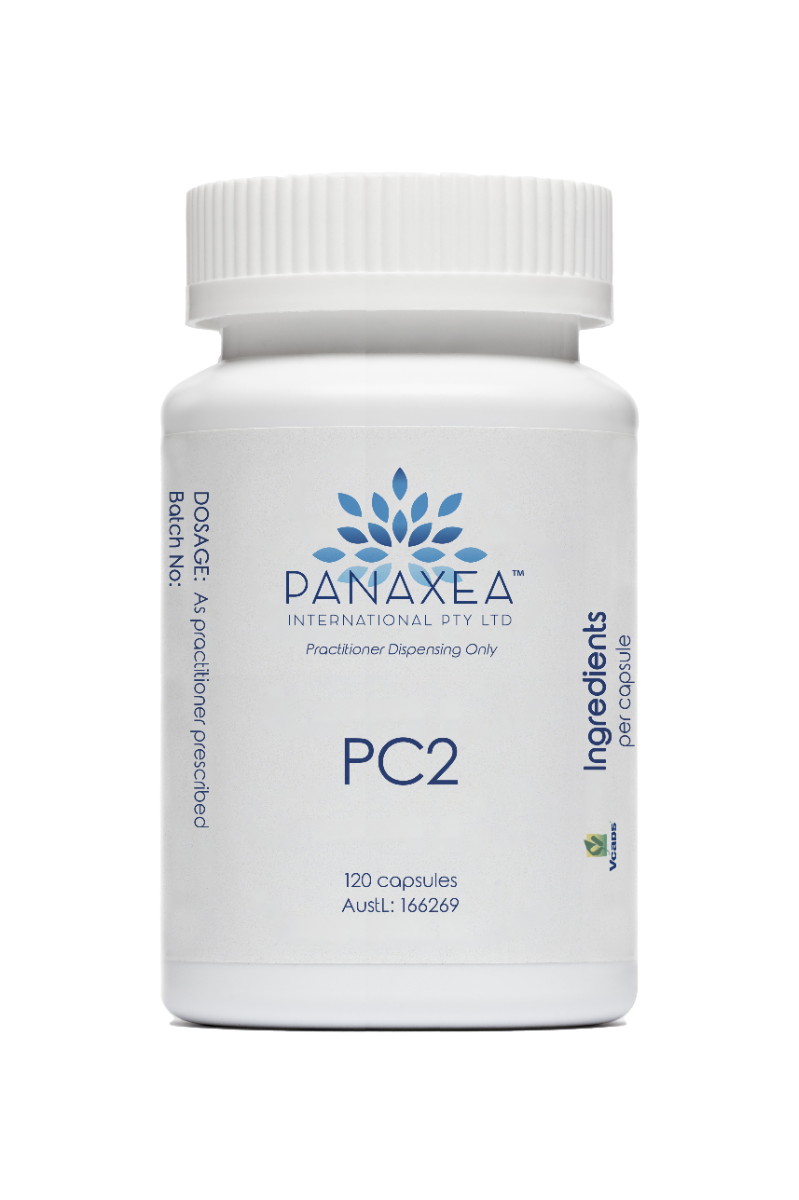
This section is provided for qualified healthcare practitioners as professional education. It summarises selected ingredient-level, pathway-level and traditional-use research relating to Qi, Blood, Blood-stasis, medicinal mushrooms, ginsenosides and flavonoids. It does not represent additional ARTG indications for PC2.
PC2 is relevant to practitioners interested in traditional Chinese medicine Qi and Blood support, Blood-stasis pattern assessment, Ganoderma research, Panax notoginseng research, Scutellaria flavonoids and botanical pathway education.
Ganoderma lucidum is included as part of the formula’s traditional Qi and immune-pathway research profile. Ganoderma has been widely discussed in professional literature in relation to polysaccharides, triterpenes, antioxidant pathways, inflammatory signalling and broader cellular research. This information is provided as ingredient-level education only and should not be interpreted as a claim that PC2 treats cancer or supports oncology protocols.
Panax notoginseng is traditionally used in Chinese medicine in Blood-related and Blood-stasis contexts. It provides ginsenoside Rg1, a constituent of interest in research relating to circulation pathways, inflammatory pathways, oxidative stress and tissue-protection models. This supports practitioner education around Blood-stasis pattern research, not cardiovascular disease or cancer treatment claims.
Scutellaria baicalensis provides flavonoids calculated as baicalin. Scutellaria and baicalin have been discussed in professional literature in relation to antioxidant pathways, inflammatory signalling, cellular pathway research and traditional heat-clearing use. These are ingredient-level research areas only and do not create additional product indications.
Chrysanthemum sinense supports the broader traditional formula profile. Practitioner interest may include traditional heat-clearing use, antioxidant pathway research, flavonoids and botanical constituent education.
The combination of Ganoderma, Panax notoginseng, Scutellaria and Chrysanthemum supports practitioner education around Qi support, Blood nourishment, Blood-stasis pattern assessment, antioxidant pathways, inflammatory pathway research and botanical constituent research. Broader research areas such as prostate cancer, PSA, apoptosis, angiogenesis, cytotoxicity, tumour biology or androgen receptor mechanisms should remain professional background only and not be presented as product indications.
This information is provided for practitioner education only and does not represent additional ARTG indications for PC2.
References available to registered practitioners on request.