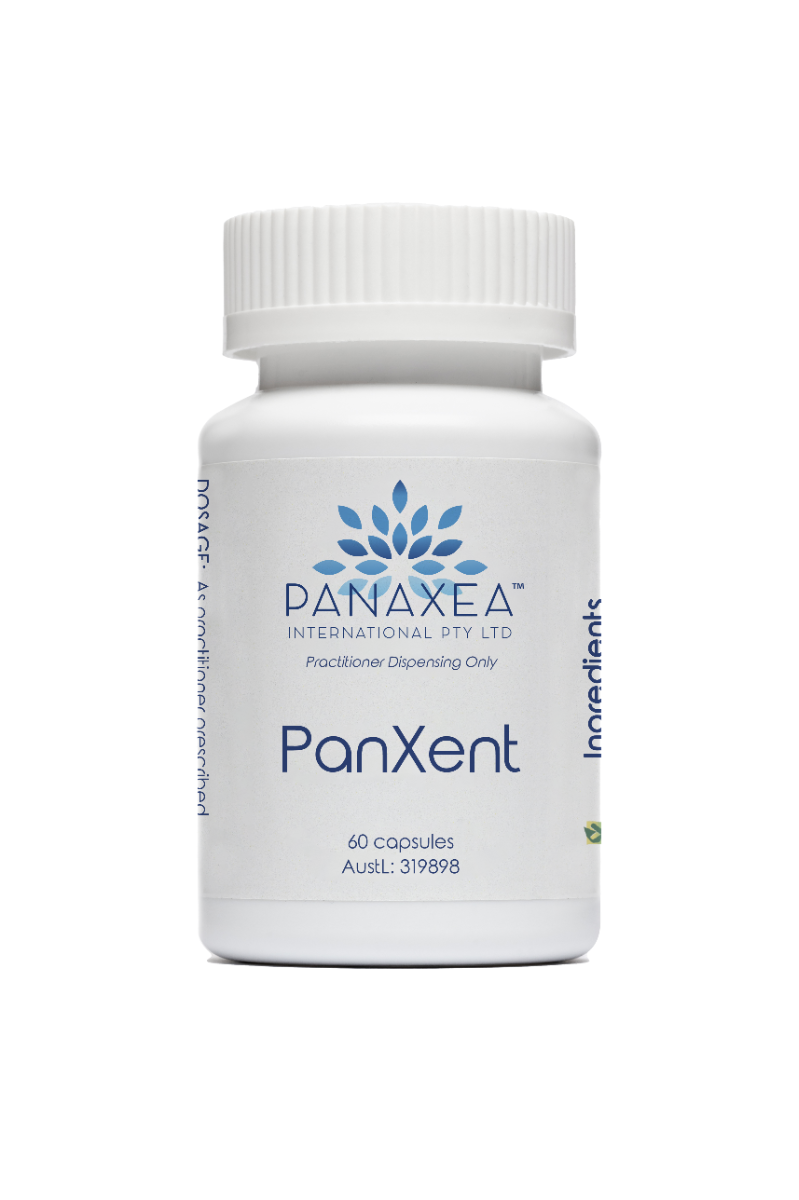
This section is provided for qualified healthcare practitioners as professional education. It summarises selected ingredient-level and traditional-use research relating to Dysphania ambrosioides, traditional vermifuge use, intestinal threadworm / pinworm support, volatile oil constituents and botanical phytochemistry. It does not represent additional ARTG indications for PanXent.
PanXent is relevant to practitioners interested in traditional North American and South American herbal medicine, vermifuge traditions, intestinal threadworm / pinworm support, Dysphania ambrosioides phytochemistry and volatile oil research.
Dysphania ambrosioides, also known historically as Chenopodium ambrosioides, has a long history of traditional use in several herbal medicine systems. Practitioner interest may include its traditional vermifuge use, volatile oil constituents, flavonoids, polyphenols and broader botanical pharmacology research.
The extract in PanXent is a concentrated 10:1 whole plant extract and contains declared volatile oil components. This supports practitioner education around its traditional vermifuge profile and ingredient-level botanical research.
Some published research has discussed Dysphania ambrosioides in relation to antimicrobial, vascular, inflammatory and other pharmacological pathways. This information should remain professional background only and should not be presented as product indications or actions for PanXent.
The product’s website positioning should remain limited to traditional support for intestinal threadworm / pinworm removal. It should not be promoted for hypertension, multidrug resistance, bacterial infection, H. pylori, malaria, cancer, diabetes, autoimmune disease, antibiotic support, roundworm, tapeworm, hookworm or schistosomiasis.
This information is provided for practitioner education only and does not represent additional ARTG indications for PanXent.
References available to registered practitioners on request.